- «We believe in people and businesses to grow together.»
- (202) 903-0304
- director@freedomnewstoday.com



US Considers Financing Guns In Schools
February 7, 2019
Last Goodbye To A Patriot
February 12, 2019
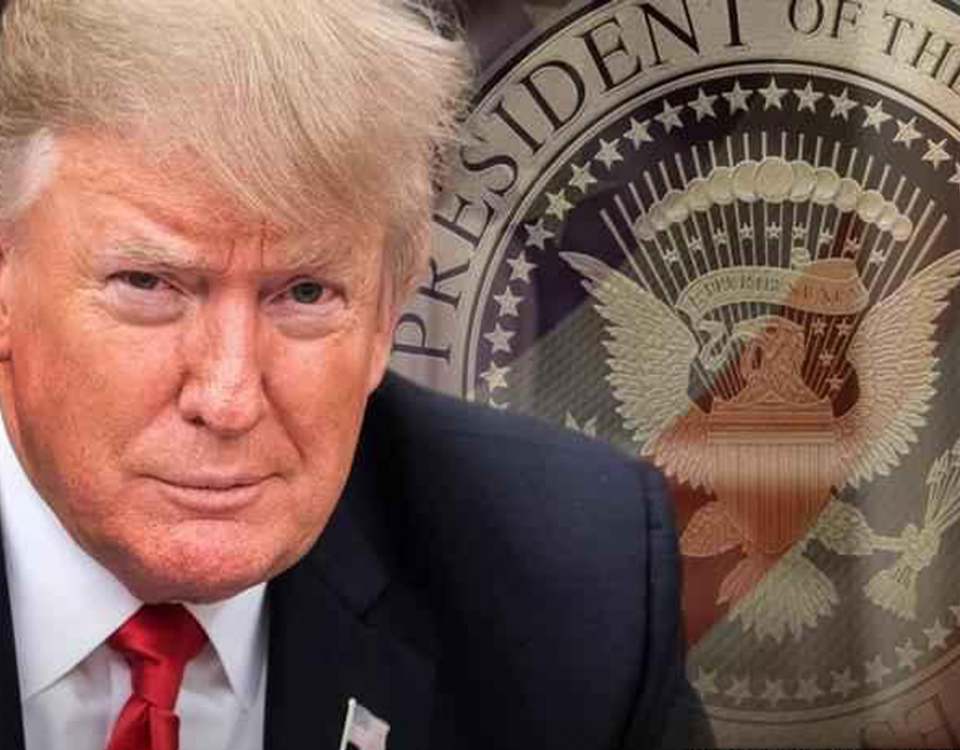
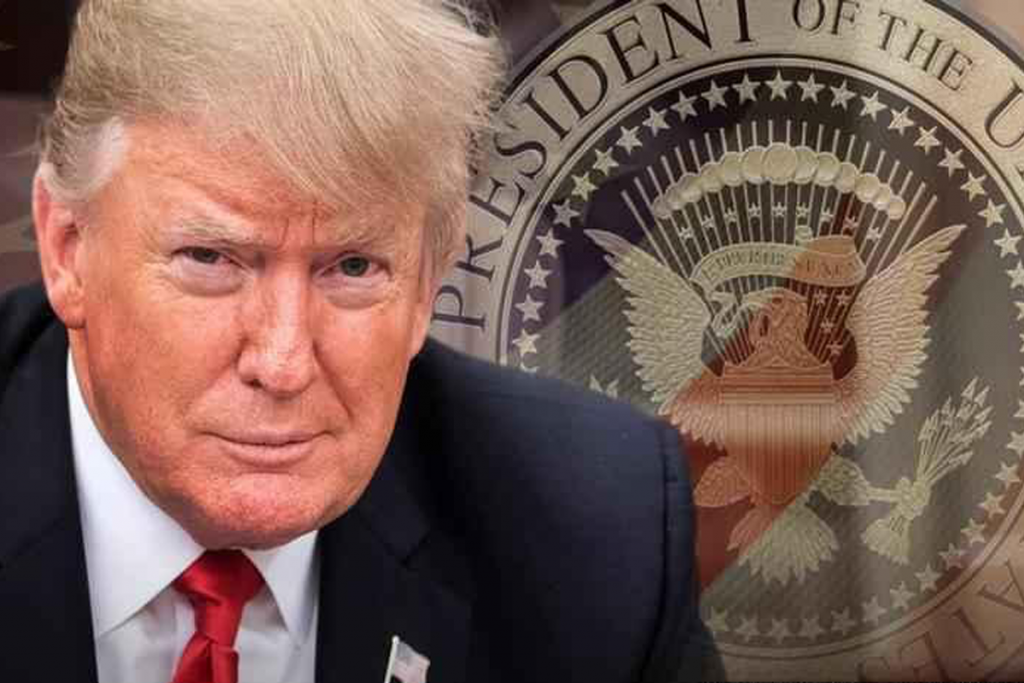
US President Donald Trump was jubilant in reaching a preliminary agreement with Mexico to replace the North American Free Trade Agreement, but he generated at least as many questions as answers. Will it be possible to convince or coerce Canada – the third NAFTA partner and the second US trade partner – to accept a new pact? Is it legal or politically feasible to reach a trade agreement that replaces NAFTA with Mexico alone? And what will happen to the complex supply chains created by US companies and other countries throughout the 24 years of NAFTA covering the three countries? “There are still a lot of questions to answer,” said Peter MacKay, a former Canadian justice, defense and foreign affairs minister, now a partner in the law firm Baker McKenzie. Trump was quick to declare that the agreement was a triumph, as he showed, he said, the stock market rally on Monday, driven in part by the apparent agreement with Mexico. “We have just signed a trade agreement with Mexico and it is a great agreement for all of us,” said the president. “It’s an agreement that many said could not be achieved.”
Trump insinuated that he could exclude Canada from the new agreement. He said he wanted to call it the “United States-Mexico Trade Agreement” because, according to him, NAFTA has earned a reputation as being harmful to American workers. However, he added, he said he wanted to give Canada the opportunity to re-enter, “provided they want to negotiate fairly.” To intensify the pressure on Ottawa, he threatened to impose new tariffs on cars imported from Canada. In statements to the press, the chief economic adviser of the White House, Larry Kudlow, exhorted Canada to “come to the table”.
“Let’s make a big deal like the one we just did with Mexico,” Kudlow said. “Otherwise, the United States may have to take action.” The Canadian NAFTA negotiator, Foreign Minister Chrystia Freeland, interrupted a trip to Europe to fly to Washington on Tuesday. “We will only sign a new NAFTA that is good for Canada and good for the middle class,” said Adam Austen, a Freeland spokesman. He added that “the signature of Canada is required”. MacKay added: “There is still a lot of uncertainty, fear, nervousness, the feeling that we look at it from the outside.”
The detractors denounced the prospect of marginalizing Canada from a North American trade agreement due in part to the risks it would pose to the companies involved in international trade. Many manufacturers have built vital supply systems that depend on being able to freely cross all NAFTA borders. Jay Timmons, president of the National Association of Manufacturers of the United States, said: “it is imperative to sign a trilateral agreement”, in view of the “colossal movement of goods and the integration of operations between the three countries.”
Trump has frequently condemned NAFTA as a “disaster” that has eliminated jobs in the United States. The treaty reduced most of the trade barriers between the three countries. The president and other detractors say the pact encouraged US manufacturers to move south of the border to exploit cheap Mexican labor. With the preliminary agreement, more manufacturing jobs could return to the United States, but it is far from an accomplished fact.
Official signatures are missing and then ratification by the congresses of each country. The Congress in Washington will not put it to a vote before next year, that is, after the November elections that could mean the end of Republican domination in the lower house, but in principle it seems at least a propaganda victory for Trump, a week after his former campaign manager was found guilty of financial crimes and that his personal ex-employer implicated him in the payment of bribes to silence two women who said they had sex with him before he became president. Before starting negotiations for a new treaty a year ago, the US government notified Congress that it would talk to Canada and Mexico. That is why Monday’s announcement left the question of whether Washington is authorized to reach an agreement with only one of the two countries.
A senior government official, who spoke to the press on condition of anonymity, said yes: the government can inform Congress that it has reached an agreement with Mexico and that if Canada wants to join, welcome. However, other analysts said the answer was not clear: “It’s something that has never been tested,” said Lori Wallach, director of Global Trade Watch, a left-leaning institute that studies globalization problems. Even a crucial ally of Trump like Kevin Brady, the Republican lawmaker who chairs the Resources and Excise Commission of the lower house, expressed caution.
He said he hopes to “carefully analyze the details and make consultations in the coming weeks to determine if the new proposal responds to the business priorities established by Congress.” Number two of the Republican Senate bloc, John Cornyn, said Monday’s announcement was a “positive step,” but that Canada should be part of the final agreement. “A trilateral agreement is the best way forward,” Cornyn said, noting that there were millions of jobs at stake. In addition, there are political reasons to keep Canada in the regional bloc. “It will be difficult for Mexico to achieve acceptance at home of the ‘agreement with Trump’ if Canada does not believe it is a good agreement,” said commercial affairs lawyer Daniel Ujczo of the Dickinson Wright PLLC fiorma.
“It will create the impression that Mexico capitulated.” Indeed, Mexico has said that it wants Canada to be included in any new agreement that replaces NAFTA. Mexican President-elect Andrés Manuel López Obrador said that “we are interested in an agreement of three countries.” For his part, Foreign Secretary Luis Videgaray told the press that “Mexico will have a free trade agreement, independent of those variables that we can not control,” in reference to the negotiations between Washington and Ottawa. According to the Office of the United States Trade Representative (USTR), Mexico accepted that 75% of the contents of a vehicle be produced within the block (compared to the current 62.5%) in order to be exempt from tariffs and that 40 to 45% is manufactured by workers who earn at least $ 16 per hour. With these changes it is expected to encourage greater production in the United States.
For months the talks stalled due to the Trump government’s insistence on including a “sunset clause”: a renegotiated NAFTA would expire after five years unless the three countries agreed to prolong it. Mexico and Canada absolutely refused to accept it. On Monday, the Trump government and Mexico announced an agreement on that issue: the reformed NAFTA would be valid for 16 years. After six years there would be a review to determine if the agreement required any update or modification. At that time a new term of 16 years would be resolved or if the agreement could expire.